
Not every roof is equally suited to solar, and finding that out after panels arrive on site is the wrong time to learn it. A bit of thinking before you commit saves a lot of hassle later.
Here’s what genuinely affects whether your roof is a good fit, and what to do if it isn’t a perfect one.
What Actually Matters When Assessing a Roof for Solar
Orientation
South-facing roofs get the most consistent sun and generally produce the most power. East or west-facing roofs still work, just with a different generation pattern through the day rather than a hard no.
Roof Pitch
A pitch of roughly 30 to 40 degrees tends to perform best in the UK, though panels can still be mounted effectively outside that range with the right frame adjustments.
Shading
A chimney, a tall tree, or a neighbouring building casting shade across even part of an array can drag down output more than people expect. It’s worth checking at different times of day, not just once.
Roof Material and Condition
Slate, tile, and standing seam metal roofs are all workable, but the fixing method differs for each. A roof nearing the end of its life is worth addressing before panels go on top of it.
Available Roof Area
More usable space simply means more panels, and more panels means more generation. Odd-shaped roofs with dormers or multiple angles can still work, just with more planning around panel layout.
Pitched Roofs: The Most Common Choice
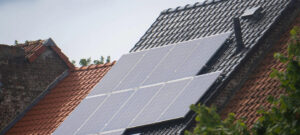
Most UK homes have a pitched roof, and it remains the simplest option for solar. Panels sit flush against the existing angle, fixed directly to the rafters beneath the tiles or slates.
Solar Panel Installation on Flat Roofs in Yorkshire
Flat roofs need a different approach entirely. Solar panel installation on flat roofs in Yorkshire typically uses a tilted mounting frame, angling the panels to catch sunlight properly rather than lying flat against the surface.
Weight and drainage both need careful thought here — ballasted mounting systems avoid penetrating the roof membrane, but they add load that the structure needs to support. It’s a common setup on extensions, bungalows, and commercial units, and solar panel installation on flat roofs in Yorkshire is well established practice for installers who know what they’re doing.
Read More: Solar Panels and Battery Storage for Yorkshire Farms: Benefits and Key Considerations
Metal and Less Common Roof Types
Standing seam metal roofs are actually one of the easier surfaces to work with, since clamps can often attach without drilling through the roof at all. Other unusual roof types just need a tailored fixing approach rather than a standard kit.
Does Roof Age Matter?
Yes, more than people expect. Fitting panels onto a roof that needs replacing within a few years means paying twice — once for the panels, and again to remove and refit them when the roofing work finally happens.
Getting a Professional Assessment
A proper site survey settles all of this far better than guesswork. Anyone specifying solar panel Yorkshire homeowners can rely on should check orientation, pitch, shading, and roof condition before recommending a system.
- Ask for a written assessment, not just a verbal opinion on the day
- Get clarity on expected generation for your specific roof, not a generic figure
- Check whether your roof needs any work done before installation
Why Choose Lawson Electrical Ltd
Lawson Electrical Ltd assesses roofs properly before recommending a solar PV Yorkshire system, rather than fitting a standard package regardless of what the roof actually needs.
Thinking about solar for your home? Get in touch with Lawson Electrical Ltd at https://lawsonelectricals.co.uk